

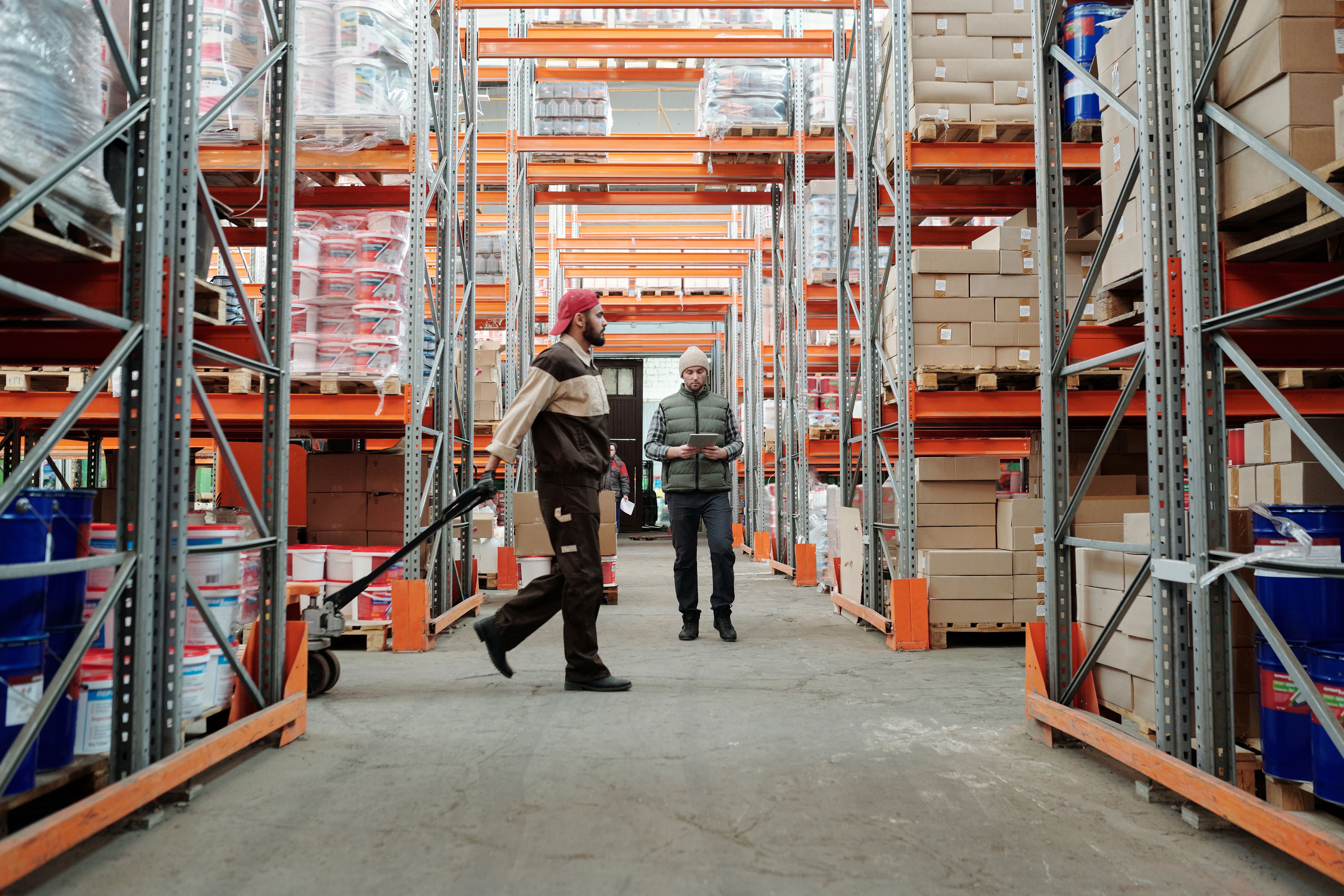

Find the job in the Warehouse & Fulfillment Industry you're searching for.
Warehouses are the backbone of modern commerce. They need a wide variety of skilled, reliable workers to keep everything running smoothly. From the moment a shipment arrives at the loading dock to the second an order goes out the door, warehouses depend on people who show up, pay attention, and take pride in doing their job right.
These operations run around the clock, which means there's no shortage of part-time, full-time, and night shift opportunities available for job seekers at every stage of their working life. The work is consistent, the demand is high, and experienced workers who bring reliability and attention to detail are exactly what these employers are looking for. If you're a Pivoter looking for steady, meaningful work, a warehouse or fulfillment center might be the right next step.

Thank you for signing to our newsletter



Warehouse Associate
A warehouse associate is the person who does a little bit of everything and keeps daily operations moving. This is typically an entry-level role, but that doesn't mean it's easy to do. Warehouse associates are counted on to be flexible and dependable.
If you like staying active in your workday, this is a role worth considering. Most employers provide training, making it a great starting point for anyone new to warehouse work.
Typical duties include:
- Unloading incoming shipments from delivery vehicles
- Inspecting deliveries for accuracy and damage
- Stocking shelves, bins, and storage areas
- Picking and packing orders for outgoing shipments
Qualifications for Warehouse Associates
Employers hiring warehouse associates look for people who are detailed, physically capable to lift heavy items and ready to work as part of a team.
This includes:
- Ability to lift up to 50 lbs consistently throughout a shift
- Comfortable standing and moving for extended periods of time
- Strong attention to detail when handling products and paperwork
- Ability to work independently as a self-starter without constant supervision
- Team-oriented attitude and willingness to help wherever needed
- Basic ability to operate warehouse equipment such as pallet jacks (training often provided)
- Reliable attendance and punctuality
Warehouse Picker/Packer
The warehouse picker/packer role is entirely focused on the fulfillment side of warehouse operations. This means making sure the right products get to the right people in the right condition, as fast as possible. If you've ever ordered something online and received exactly what you expected in good shape, you have a warehouse picker/packer to thank for that.
Pickers work from order lists or handheld scanners to locate items throughout the warehouse, while packers prepare those items for safe shipment. It's active, detail-oriented work that rewards people who are organized and efficient. The volume of orders can vary significantly by season, which means this role often has strong opportunities for extra hours during busy periods like the holidays.
Typical duties include:
- Locating and picking items from warehouse shelves based on order lists
- Packaging orders securely for shipping
- Printing and applying shipping labels accurately
- Sorting and staging outgoing orders for carrier pickup
- Inspecting items for damage or quality issues before packing
- Meeting daily pick and pack rate targets
Qualifications for Pickers & Packers
- Sharp eye for product differences and the ability to distinguish between similar items accurately
- Strong attention to detail for order accuracy
- Ability to multi-task and maintain pace in a high-volume environment
- Comfortable using handheld RF scanners or order management systems
- Ability to lift up to 40 lbs. and stand for extended periods
- Good time management
- High school diploma or GED preferred
Warehouse Material Handler
Material handlers are the people who keep the physical flow of a warehouse running. Their primary focus is the movement of goods such as loading and unloading trucks, moving materials between areas of the warehouse, and making sure everything that comes in goes out properly. Material handlers often do inventory management making sure that what's on the shelves matches what's in the system. They're also frequently responsible for maintaining safety standards in their work area, which matters a lot around heavy equipment, tight spaces, and moving vehicles. This role tends to require more physical strength and equipment experience than some other warehouse positions, but it's also a highly valued and well-compensated one.
Typical duties include:
- Loading and unloading freight from trucks and trailers
- Moving materials using forklifts, pallet jacks, or hand trucks
- Verifying incoming and outgoing shipments against documentation
- Supporting inventory management by maintaining accurate stock locations
- Operating warehouse equipment safely and in compliance with safety protocols
- Identifying and reporting quality control issues or damaged goods
Qualifications for Material Handlers
- Experience with Warehouse Management Systems preferred
- Familiarity with RF scanners and inventory management tools
- Forklift certification preferred or willingness to obtain
- Solid basic math skills for verifying quantities and completing paperwork
- Strong attention to detail and commitment to accuracy and safety
- Ability to lift heavy items (often 50+ lbs.) and perform physical tasks
- High school diploma or GED preferred
Warehouse Inventory Clerk
The inventory clerk position sits at the intersection of material handlers and pickers/packers as they are responsible for making sure the warehouse always knows exactly what it has, where it is, and whether the numbers add up. This role involves a lot of counting, recording, investigating, and auditing. This is perfect for people who are methodical, detail-oriented, and comfortable working with data as well as physical products. If you've got a background in recordkeeping, data entry, or any kind of inventory-related work, this role is a strong fit. Employers count on inventory clerks to catch mistakes before they become big problems. Missing products, shipment errors, and storage issues are all things this role is responsible for resolving.
This role requires:
- Conducting regular inventory counts and cycle counts
- Investigating and resolving inventory discrepancies like missing items or shipment errors
- Managing proper storage of inventory by making sure items are in the right locations and properly labeled
- Auditing inventory records for accuracy
- Entering and maintaining inventory data in warehouse management systems
- Coordinating with receiving and fulfillment teams to check inventory levels
- Generating inventory reports for supervisors and management
Qualifications for Warehouse Inventory Clerks
- Experience with inventory management systems preferred
- Strong data entry skills and comfort working with spreadsheets or warehouse software
- Must be comfortable with counting, calculating quantities, and reconciling numbers
- High attention to detail and ability to spot inconsistencies
- Comfortable lifting heavy objects, climbing ladders, and moving through a warehouse environment
- Organized and methodical approach to work
- Ability to work and follow through on investigations independently
- High school diploma or GED required
Warehouse Shipping & Receiving Clerk
The shipping and receiving clerk is one of the more complex roles in a warehouse environment. It's not purely a warehouse job. It requires someone who can manage both warehouse operations and logistics. This means the clerk handles the physical side of freight handling while also working on the documentation, communication, and coordination that keeps freight moving efficiently. On any given day, a shipping and receiving clerk might be verifying an incoming delivery against a purchase order, coordinating a carrier pickup, and communicating with a vendor about a discrepancy—all before lunch. This role is a great fit for people who are organized, comfortable with paperwork and computer systems, and able to communicate clearly with drivers, vendors, and internal teams. It's also a role where experience in other industries can transfer surprisingly well. If you've ever handled purchasing, logistics coordination, or supply chain work in any context, those skills can apply to this role.
Typical duties include:
- Unloading and verifying incoming shipments against purchase orders and packing slips
- Preparing outgoing shipping documentation including Bills of Lading (BoL) and shipping labels
- Coordinating carrier pickups and deliveries
- Processing inventory intake and entering them into the warehouse management system
- Communicating with vendors regarding shipment discrepancies, delays, or damage claims
- Ensuring compliance with shipping regulations and carrier requirements
Qualifications for Shipping & Receiving Clerks
- Computer literacy required: Must be comfortable with Microsoft Excel and data entry
- Familiarity with warehouse management systems, RF scanners, and barcode readers preferred
- Basic math skills for verifying quantities, weights, and measurements
- Experience with recordkeeping and documentation
- Strong attention to detail, particularly when reviewing shipping documents and purchase orders
- Clear communication skills
- Ability to work independently and manage multiple priorities at once
- High school diploma or GED required; some employers prefer additional logistics or supply chain coursework
How it works
Invitations, not applications.
Build your profile in minutes
Employers invite you
You decide what’s next


Thank you for signing to our newsletter


